-

According to statistics, every year, the country has to import 6 million tons of petroleum, 40% of which is for transportation industry. The annual costs of importing petroleum and producing electricity have accounted for one fifth of total GDP of the country and has now “consumed” all GDP of the agricultural sector. The objects which consume much energy are the Industry (consumes 47%), transportation (20%) and households (15%) ...
-

According to the Ministry of Industry and Trade, the contests have attracted more than 100 buildings, 77 among which meet demands of organization board. Thirty three buildings of those have given domestic prizes and five won the prizes at ASEAN level. In the past, most of buildings were in the south. This year, many of buildings including schools and hospitals are located in the north.
-

A group of us from the NRDC teams in Beijing, San Francisco, and D.C. just visited Shanghai, China to discuss opportunities to collaborate on helping turn an old iron and steel alloy plant into a new "clean energy development zone." The site is one of 12 old industrial sites that China is planning to turn into clean energy development zones. NRDC's China Program will be working with this project to make it as energy-efficient as possible.
-

A new institute is being launched to help Idaho residents and businesses conserve power and save money. The Institute will evaluate energy-saving technologies to see which ones work best. The program will be run by the Idaho Falls' Center of Advanced Energy Studies, and Otter says it will play an important role in Idaho's energy future.
-

The Asian Development Bank (ADB) is optimistic that Asia can get the 10 trillion US dollars it needs to finance sustainable energy projects over the next 20 years. The projects will include more efficient use of coal and oil as well as greater reliance on renewable power sources such as wind and solar energy.
-

General Electric has created new halogen compact fluorescent light bulbs, GE Reveal and GE Energy Smart Soft, that unlike typical fluorescents (CFLs), contain less mercury (only 1 milligram) and don’t take time to warm up, being more efficient.
-

The European Hydrogen Association (EHA) and the European Regions and Municipalities Partnership for hydrogen and fuel cells (HyRaMP) have called for accelerated support from the EU, national and local governments to ensure a sustainable build-up of hydrogen infrastructure in Europe. Both organizations stress the need to integrate hydrogen infrastructure development into the EU’s current energy and transport infrastructure plans.
-

Tập đoàn Điện lực Việt Nam (EVN) dự báo, trong tháng 11, tình hình cung cấp điện vẫn chưa được cải thiện, do hệ thống điện quốc gia tiếp tục không có dự phòng và thiếu công suất đỉnh do các nhà máy nhiệt điện than mới vận hành chưa tin cậy, một số tổ máy nhiệt điện khác phải ngừng sửa chữa theo yêu cầu.
-

The Metropolitan building (235 Dong Khoi, District 1, Ho Chi Minh City), with the main function of an office for rent, was built in May 1996. Since 2004, seeing the importance of saving electricity in terms of economy as well as environment, the Directorate of the building has invested in renovating energy using equipment to save costs and meet development demand. With investment solutions, the annual power consumption of the building has been reduced by about 11.9%.
-

Making a cellphone battery last ten times longer is a first target for a large research project that IBM, Infineon and a number of European universities unveiled on Wednesday. The new research project, called Steeper, also aims to decrease the energy needs of other electronic devices like TV sets or supercomputers by 10 times when active, and to virtually eliminate power consumption when they are in standby mode.
-

A new clean tech company called Totempower Energy Systems Ltd. has come up with an easy way to put wind power within the grasp of everyday homeowners. The company is developing new micro-wind turbines that are designed for close quarters and non-disruptive installation, but the real key to getting more micro-wind turbines into consumers’ hands is the company’s “ease of ownership” plan which provides a soup-to-nuts service including site selection and connecting the turbine to the home electrical system.
-

MIT researchers are hopeful of capturing and releasing solar energy with the help of thermo-chemical technology. Scientists were already working on this technology in seventies but this project was aborted due to its expensiveness and termed as too impractical to achieve. But MIT researchers are now gearing up to take this thermo-chemical technology that is supposed to convert solar energy into electrical energy.
-

The People’s Committee of Ninh Thuan Province recently presented a master plan for socioeconomic development to 2020 with a vision towards 2030, with an ambition to turn Ninh Thuan into an energy center of the whole country and to list its name among the 20 rich provinces of Vietnam.
-

The Coca-Cola company has been introducing more electric vehicles and other low-emissions trucks into its massive fleet, and now researchers at the Hong Kong Polytechnic University are developing yet another alternative energy option. The team has been working on a solar powered air conditioning system that would significantly reduce or eliminate beverage delivery truck emissions related to cooling.
-

Only to the visually-impaired it may look like fuel cells and electric cars don’t enjoy success nowadays. Daimler AG has just started a pilot program of leasing Mercedes-Benz hydrogen fuel cell cars to 5 to 15 users in the US, to see how their car acts in real life conditions and how people receive them. To me this looks like a postpone of the real thing, just like GM did to EV1.
-

Works such as leveling an area of 251ha, building bypass road south of Hau river, compensating and site clearing, resettling 315 households… have been completed. The constructions of roads, electricity system, water supply system, embankments along Hau river in the plant construction site and coal slag dumping area ... are being expeditiously implemented to be completed on schedule.
-

Tổng thống Nga Dmitry Medvedev đã đến Hà Nội hôm 30/10 để tham dự Hội nghị cấp cao Đông Á 17. “Trong số các thỏa thuận quan trọng nhất được ký kết giữa hai bên có một thỏa thuận liên chính phủ về việc hợp tác xây dựng một nhà máy điện hạt nhân ở Việt Nam”, ông Sergei Prikhodko phát biểu trước thềm chuyến bay sang Việt Nam của Tổng thống Medvedev.
-

It is not that unusual for offshore oil to develop offshore wind technology. The two share some of the same technical and engineering issues. Stat-Oil in Norway is also investing in offshore wind development, because many of the engineering solutions found to develop offshore oil, are also applicable to the development of offshore wind, like building platforms in deep sea.
-

Trước những diễn biến phức tạp của tình hình thời tiết và tiến độ triển khai đầu tư xây dựng nhiều dự án điện chậm so với kế hoạch khiến hệ thống điện quốc gia phải vận hành trong điều kiện không có điện dự phòng.
-

The project is following up on a pre-feasibility study conducted by the Clinton Climate Initiative. Fluor’s task is to develop a conceptual master plan to be unveiled at the South African Solar Park Investors Conference (Oct. 28 and 29), which will be held in the Northern Cape Province.







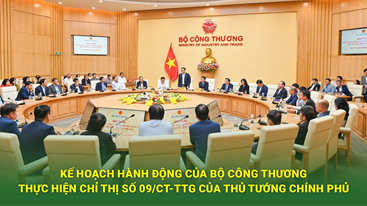 Kế hoạch hành động của Bộ Công Thương thực hiện Chỉ thị số 09/CT-TTg của Thủ tướng Chính phủ
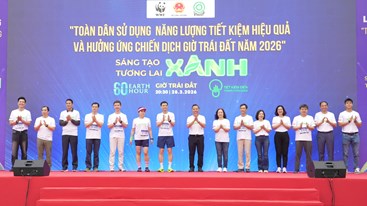 Bộ Công Thương phát động "Toàn dân sử dụng năng lượng tiết kiệm hiệu quả và hưởng ứng Chiến dịch Giờ Trái đất năm 2026"
 Thủ tướng Chính phủ Chỉ thị tăng cường thực hiện tiết kiệm năng lượng, thúc đẩy chuyển dịch năng lượng và phát triển phương tiện giao thông điện








 CHUYÊN GIA CHIA SẺ - SỐ 7: Công nghệ nhiệt trong kỷ nguyên chuyển đổi xanh
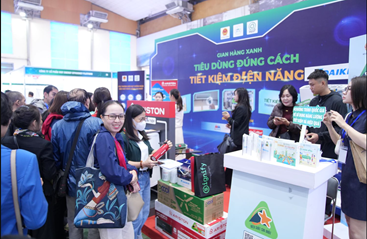 Sắp diễn ra chuỗi sự kiện Triển lãm và hội thảo về sử dụng năng lượng tiết kiệm và hiệu quả toàn quốc
 [PODCAST TKNL] Điện lực miền Nam tiết kiệm hơn 2.342 triệu kWh điện
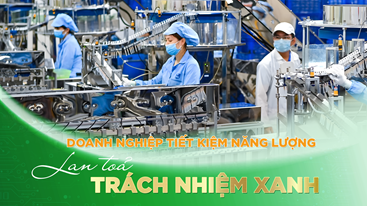 [E_magazine] Doanh nghiệp tiết kiệm năng lượng, lan tỏa trách nhiệm xanh
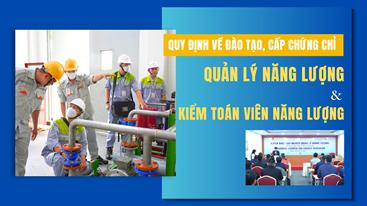 Quy định về đào tạo, cấp chứng chỉ quản lý năng lượng và kiểm toán viên năng lượng
 [PODCAST TKNL] Sử dụng năng lượng tiết kiệm, hiệu quả trong doanh nghiệp, công trình và hệ thống điện hiện đại
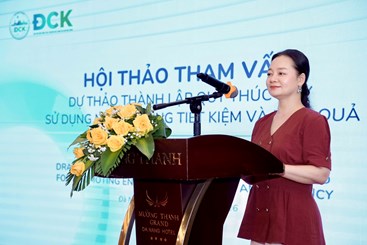 Tham vấn Dự thảo thành lập Quỹ thúc đẩy sử dụng năng lượng tiết kiệm và hiệu quả