

-
The ongoing war in Ukraine has underscored the EU’s vulnerability to external energy supplies. Europe’s reliance on imported fossil fuels is a liability, not only environmentally but also geopolitically. Prioritising energy efficiency alongside renewable energy and electrification is essential to reducing this dependence. The Energy Efficiency First (EE1st) principle holds the potential to strengthen security and resilience aiming at prioritising energy efficiency wherever it is the most cost-effective solution, ensuring that energy needs are met sustainably and economically.
-
As 2024 draws to a close, Europe’s energy winter preparedness is a priority. Since Russia’s invasion of Ukraine in February 2022, the EU and its member countries have taken many bold measures to decrease reliance on fossil fuels, accelerate the shift to clean energy and build a more resilient and diversified energy system, with a view to strengthening energy independence and ensuring stable, affordable energy supplies for citizens and businesses.
-
IEA Executive Director Fatih Birol and European Commissioner for Energy and Housing Dan Jørgensen today announced that they will co-host the IEA’s 10th Annual Global Conference on Energy Efficiency in Brussels, Belgium, on 12-13 June 2025.
-
The European Commission is preparing technical specifications for a study to develop a measurement framework for the energy efficiency of general-purpose AI models. Data centres’ share of global energy consumption is expected to grow to 7% by 2030.
-
The EBRD, in collaboration with the EU and Japan, is providing a €4 million loan to NLB Bank AD Skopje. The funds will support energy-efficiency upgrades for households, aiming to reduce CO2 emissions and improve quality of life.
-
The EU’s energy-efficiency policies are viewed as robust. The next challenge is making sure they’re implemented through to the local level, says the Coalition for Energy Savings and smartEn.
-
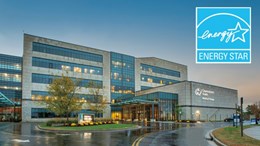
Owensboro Health Regional Hospital has earned its fifth Energy Star certification, with officials saying OH has saved more than $4.5 million over the last decade due to energy efficiency practices.
According to a release from OH, participating healthcare facilities strive to obtain the Energy Star recognition threshold of 75 or higher. Owensboro Health Regional Hospital scored 77, meaning its Energy Use Index (EUI) is better than 77% of hospitals in the country. Only two other hospitals in Kentucky have been Energy Star recipients longer than Owensboro Health.
-
I had the opportunity to visit a children’s health center located about 300 km away from Astana, on the shores of a beautiful lake. The center, which celebrated its 60th anniversary this year, has introduced green technologies, such as renewable energy and energy efficiency systems. It was inspiring to witness how such initiatives can tangibly improve sustainability while reducing environmental impacts.
-
Forward-looking EU policies, with people and the economy at their heart, position Europe to become the world’s first climate-neutral continent by 2050.
-
In a concerted effort to bolster energy efficiency and drive the green transition, the European Investment Bank Group (EIBG), the European Commission (EC), and the Solar Impulse Foundation (SIF) launched a new pilot initiative aimed at boosting energy efficiency investments for small and medium-sized enterprises (SMEs). The initiative, a key element of the EIB Group Strategic Roadmap 2024-2027, is designed to enhance the competitiveness and sustainability of SMEs across Europe.
-
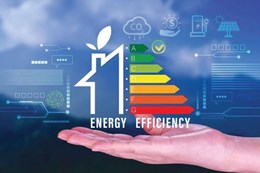
Global energy consumption continues to rise, driven by factors such as population growth, urbanisation, industrialisation, and economic development. Efforts to improve energy efficiency are critical for managing global energy consumption and addressing sustainability challenges. By reducing the amount of energy needed to provide goods and services, energy efficiency measures can help decouple economic growth from energy consumption, enabling societies to achieve their development goals while minimising environmental impacts.
-
Energy efficiency is often neglected in key investment decisions, but the European Investment Bank and asset managers Aquila Capital are convinced there’s a positive business case to be made.
-
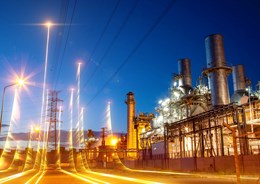
Industrial players currently face a double challenge: how can they battle increasing costs for energy and reduce emissions at the same time. This double challenge has also been the main topic of the Business Breakfast organised by Bilfinger, one of the leading international providers of industrial services in Eastern Europe, in Bucharest this May. Bilfinger experts discussed with representatives of major industrial investors what the challenges are and how to ensure that their operations are energy efficient or even self-sufficient.
-
The World Bank announced the launch of an ambitious new regional initiative aimed at significantly accelerating energy efficiency to ensure secure, affordable, and clean energy supply across Europe and Central Asia.
-
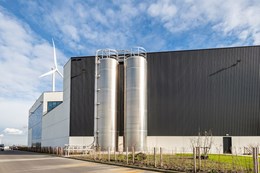
ABB has opened a new €20 million injection molding manufacturing site at Evergem, near Ghent in Belgium, to meet the growing demand for safe, smart and sustainable electrification solutions in Europe.
-
A £7m scheme to install green energy heating schemes at two public buildings is set to be scrapped. Exeter City Council was awarded £6.4m of government money in 2023 to "decarbonise" the Royal Albert Memorial Museum and the Riverside Leisure Centre.
-
According to the European Commission, buildings in the European Union are responsible for 40% of final energy consumption in the European Union and 36% of its energy-related greenhouse gas emissions, while 75% of the European Union’s buildings are still energy inefficient and 85-95% of the buildings that exist today will continue to exist in 2050.
-
In March 2024, MEPs adopted plans, already agreed upon with Council, to help reduce energy consumption and greenhouse-gas emissions from the buildings sector.
-
Vietnam's Deputy Prime Minister and Minister of Foreign Affairs Bui Thanh Son expressed hopes of learning from European nations about carbon markets, international integration, and green hydrogen development. He emphasized the need for continued support in funding, technology, and training.
-
Industry is the second largest source of CO2 emissions, with heavy industries like chemicals, steel, and cement responsible for nearly 60% of energy consumption. Energy efficiency is crucial for meeting climate targets in the EU, but can it alone decarbonize these sectors? This paper examines the role of energy-efficient technologies and necessary policy recommendations.