

-
To limit global warming to 1.5°C, we need to cut emissions by about 7% annually. Right now, emissions are rising by 1.5% each year. Energy-related emissions contribute to more than 80% of this global total. And although renewable energy production has more than doubled in the last decade, it still makes up only slightly over 13% of total energy use, up from 9% in 2011.
-
Nova Scotia is unveiling new details on its planned public housing project. It says the bulk of the new homes will be coming to the Halifax area. As Skye Bryden-Blom reports, it’s also introducing 25 new modular units as it looks to bolster its affordable housing stock.
-
In order to protect the environment and green the chemical industry, in recent years, Vietnam Chemical Group has implemented many solutions.
-
Feeling anxious every time you receive your utilities bill? It may be time to reassess your electricity usage. Here are some energy-saving tips to help you maximise your electricity savings.
-
With insufficient awareness of the benefits of energy audits, many businesses only conduct energy audits as a response to government requests, instead of considering them as a solution to save energy, reduce production costs, protect the environment, and move towards sustainable development.
-
In March 2024, MEPs adopted plans, already agreed upon with Council, to help reduce energy consumption and greenhouse-gas emissions from the buildings sector.
-
Energy efficiency has been recognised as a key piece of the net-zero puzzle but faster uptake of existing technologies is needed.
-
Residential retrofit startups agree: Energy savings must pay for quality-of-life improvements to grow business and bring in lower-cost capital.
-
No effect of LEED certification on average energy consumption in federal buildings.
-
Thermoelectric generators that can convert waste heat to clean energy could soon be as efficient as other renewable energy sources, like solar, according to a team led by Penn State scientists.
-
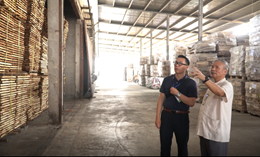
In 2023, four enterprises in the steel production, building materials, and wood processing sectors participated in the Voluntary Agreement Scheme on Energy Efficiency in Energy-Intensive Industries (VAS Program), within the framework of the Energy Partnership Program between Vietnam and Denmark 2020-2025 (DEPP3 Program), implemented by the Ministry of Industry and Trade in collaboration with the Embassy of Denmark and the Danish Energy Agency.
-
Canada's buildings sector is the third-largest contributor to greenhouse gas emissions across the country. We must increase the scale and pace of retrofitting buildings across the country to make them more energy-efficient, increasing savings and reducing emissions.
-
A two-year dataset on a residential-to-office retrofit shows how low-energy and passive building systems can enhance performance in future projects, according to a paper published in Scientific Data.
-
Public bodies and Government Departments are 32.5% more energy efficient than in 2009.
-
Scientists at the U.S. Department of Energy’s Argonne National Laboratory invented a new way to control how electricity moves in and out of a special material used in microelectronics. This technique is called “redox gating.”
-
Vietnam's Deputy Prime Minister and Minister of Foreign Affairs Bui Thanh Son expressed hopes of learning from European nations about carbon markets, international integration, and green hydrogen development. He emphasized the need for continued support in funding, technology, and training.
-
A groundbreaking development in massless energy storage has been achieved by a research group at Chalmers University of Technology in Sweden. Their innovative structural battery has the potential to reduce the weight of laptops by half, make mobile phones as thin as credit cards, and boost the driving range of electric cars by up to 70% on a single charge.
-
Schneider Electric expects the reference designs to address the evolving demands of AI workloads while optimizing performance, scalability, and overall sustainability
-
Investments by the governments of Canada and Ontario through the Sustainable Canadian Agricultural Partnership (Sustainable CAP) are resulting in over $16 million worth of energy cost savings projects to help food processing businesses increase energy efficiency and lower their costs.
-
Industry is the second largest source of CO2 emissions, with heavy industries like chemicals, steel, and cement responsible for nearly 60% of energy consumption. Energy efficiency is crucial for meeting climate targets in the EU, but can it alone decarbonize these sectors? This paper examines the role of energy-efficient technologies and necessary policy recommendations.