-

On 25/08/2010, Ho Chi Minh City Energy Conversation Center, in coordination with Ben Tre Women's Union, organized training on energy efficiency for over 400 participants who are members of Women's Union in the locality. This is one of the activities of the project "Raising awareness on cleaner production, energy efficiency and conservation for the public", chaired by Ben Tre Department of Science and Technology.
-

Struggling Japanese Automaker Suzuki hopes it will fare better in India than it has in the US. To help make sure it does, Suzuki introduced Indian press to a full line-up of clean-burning CNG vehicles earlier this week.
-

Vinh Phuc has more than 2,200 enterprises, of which two thirds are small and medium. There is a wide variety of industries such as food processing, textile, leather, wood, forestry, paper, and steel. Especially, Vinh Phuc is one of the provinces with the highest output of baked tile and brick in our country. Specifically, with about 900 manual brick facilities over nine districts, Vinh Phuc’s tile brick output is around 900 million pieces per year.
-

Located in the district of Yen Thanh, Nghe An, Yen Thanh Tapioca Plant, directly under Engine and Agricultural Machinery Corporation in Nghe An, was established in 2003. During the past six years, the factory has always faced many problems of power consumption, emissions, waste water and environment pollution.
-

Should 1kWh of electricity be saved, we would reduce the amount of carbon dioxide emission into the environment by 0.5634 kg, helping mitigate climate change. So saving power should be one of the priorities to adapt to climate change.
-

"This is the first demonstration of a new class of biofuel cells," said Shelley Minteer, Ph.D., who presented the report. "When further developed, these devices have the potential for replacing disposable and rechargeable batteriesin a wide variety of consumer electronics and other products. It is the first such device based on one of the microscopic parts of the billions upon billions of cells that make up the body."
-

"Our research could pave the way for turning electricity from the atmosphere into an alternative energy source for the future," said study leader Fernando Galembeck, Ph.D. His research may help explain a 200-year-old scientific riddle about how electricity is produced and discharged in the atmosphere. "Just as solar energy could free some households from paying electric bills, this promising new energy source could have a similar effect," he maintained.
-

Đầu tháng 8, xăng sinh học (E5) “made in Vietnam” chính thức bán ra trên thị trường. Ít ai biết hơn 50% sản lượng xăng E5 đó đã được sản xuất từ Nhà máy Cồn ethanol Đại Tân (Đại Lộc-Quảng Nam). Đây là một bước đi quan trọng cho giải pháp tìm kiếm năng lượng sinh học thay thế của Việt Nam trong thời đại hiện nay…
-

Sa mạc đầy nắng là nơi lý tưởng cho việc đặt các tấm pin năng lượng để khai thác nguồn năng lượng gần như vô tận từ Mặt Trời. Nhưng cát và bụi bám lên bề mặt của các tấm pin làm giảm hiệu quả sản xuất điện năng của chúng đến 40%. Các biện pháp vệ sinh không khả thi ở nơi hiếm hoi về nước. Giải pháp sau cùng tỏ ra hữu hiệu nhất là dùng các tấm pin năng lượng có khả năng tự 'thổi' bay bụi khi chúng bám đến một lượng nhất định. Đây là công trình nghiên cứu của giáo sư Malay K. Mazumder dựa trên công nghệ được ứng dụng trên sao Hỏa.
-

The left side of the chart shows the different sources of energy and the amounts produced. Following the flow of energy from left to right, the pink boxes show where the energy is consumed (electrical generation, residential, commercial, industrial and transportation) while the shades of gray show the amount of energy lost or rejected – often through heat loss. (Credit: Image courtesy of DOE/Lawrence Livermore National Laboratory)
-

A new joint venture research work at Stanford and SLAC National Accelerator Laboratory, supported by Department of Energy and DARPA has come up with a new solar energy conversion process that can potentially double the efficiency of solar cells. Stanford engineers have discovered this new and totally different process to harvest energy from sun.
-

Even though wind energy is a clean and cost-effective source of energy, it does have one slight drawback: no one can control when the wind blows. This occasionally leads to difficulties in matching consumers’ demand for energy with the available supply.
-

In the 1990s, the solar energy technology was introduced into Vietnam through projects funded by the governments of Spanish, Dutch, French and German. Many solar energy projects have been put into application since then, mainly to meet electricity needs of people in remote and rural areas, where the national grid has not reached. Unfortunately, those above projects are only in pilot scale.
-

A group of engineers at Bridgestone America’s Technical Center in Akron, along with students from DeLaSalle School in Kansas City have recently developed a new all-electric car which has been successfully tested on Bridgestone’s Texas Proving Grounds.
-

Before joining the cleaner production component in the industry (CPI), during the production process, Ngoc Lap tea factory used to encounter major environmental problems such as high concentration of dust, noise pollution, and smoke from burning coal, which directly affected the working conditions of employees, worsen living condition in the neighborhoods and schools near the factory. The amount of carbon dioxide emission from the plant is about 2,500 tons per year.
-

Two co-authors Nguyen Trong Kien and Nguyen Van Hoang of Nguyen Hoang Tuy Company (Ho Chi Minh City) have successfully implemented a system for remote control and supervision of public lighting, detection of electrical leak system via SMS. Accordingly, in addition to remote controlling lighting of public lamps, the system is also capable of detecting current leakage status and reporting to the management department for prompt react.
-

Ocean Renewable Power Company (ORPC), an industry leader in tidal, river and deep-water ocean current energy technology and projects, announced today that its Beta Power System, the largest ocean energy "power plant" ever installed in U.S. waters, has successfully generated grid-compatible power from tidal currents at its Cobscook Bay site in Eastport, Maine.
-

One of the largest orchards in Massachusetts has just cut its utility bill 80% with a $1.1 million 220 KW solar power plant. The state of Massachusetts helped Carlson Orchards with grants totaling $595,000 to help in the installation of the 1,050 solar photovoltaic panels.
-

One purpose of developing solar power technology is to support the load for the national grid and enable consumers to use EVN’s electricity at peak hours with price of off-peak hours (price of grid electricity at night is only 500 dong per Kwh, while during peak hour it is about 2000 dong, calculated accumulatively).
-

The Prime Minister has approved a VND3trillion project to train and develop human resources for the atomic energy field from now until 2020.







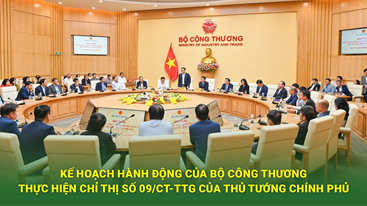 Kế hoạch hành động của Bộ Công Thương thực hiện Chỉ thị số 09/CT-TTg của Thủ tướng Chính phủ
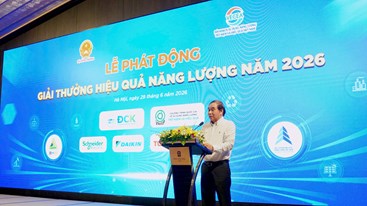
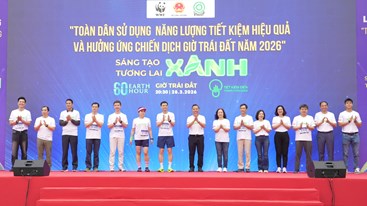 Bộ Công Thương phát động "Toàn dân sử dụng năng lượng tiết kiệm hiệu quả và hưởng ứng Chiến dịch Giờ Trái đất năm 2026"
 Thủ tướng Chính phủ Chỉ thị tăng cường thực hiện tiết kiệm năng lượng, thúc đẩy chuyển dịch năng lượng và phát triển phương tiện giao thông điện










 Phát động cuộc thi trực tuyến "Tìm hiểu kiến thức về sử dụng năng lượng tiết kiệm và hiệu quả năm 2026"
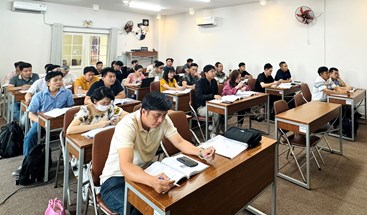 Khóa đào tạo Người quản lý năng lượng, Kiểm toán viên năng lượng
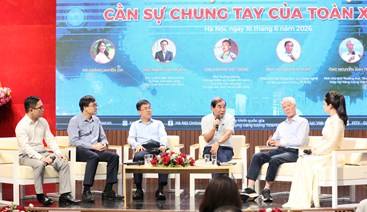 Tiết kiệm năng lượng cần sự chung tay của toàn xã hội
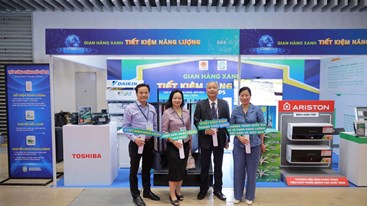
 [PODCAST TKNL] Bộ Công Thương tổ chức 25 Gian hàng Xanh - Tiết kiệm năng lượng trên toàn quốc
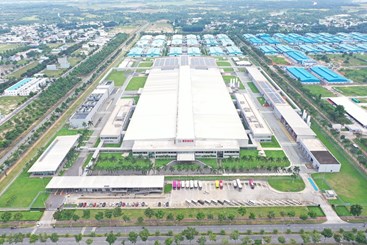 Nhà máy Bosch Việt Nam tối ưu năng lượng, hướng tới vận hành sản xuất bền vững
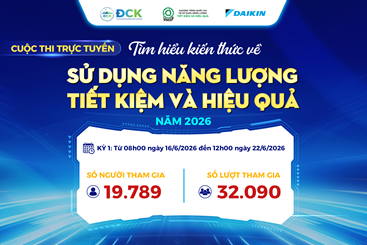 Kết quả Kỳ I Cuộc thi trực tuyến "Tìm hiểu kiến thức về sử dụng năng lượng tiết kiệm và hiệu quả năm 2026"
 [PODCAST TKNL] TP. Hồ Chí Minh tăng cường tiết kiệm điện và phát triển điện mặt trời mái nhà