-

Verve Energy in collaboration with BP Solar are planning to build Australia’s largest ever grid-connected solar power plant. The photovoltaic power plant is expected to generate about 10MW of clean energy and according to the two companies, it will be built in Geraldton, Western Australia.
-

A team of researchers from the University of Nevada at Reno is out to prove that sludge from a wastewater treatment plant can be dried, powdered, gassified as biofuel, and then burned to generate electricity, which in turn can run equipment at the same treatment plant. Talk about having your cake and eating it, too! The question is whether the researchers can make their sewage sludge-to-biofuel process operate at a cost low enough to compete with the price of conventional fuels.
-

Two scientists are on a path-breaking method to produce ’sea-urchins’ to expedite the work capacity and efficiency of photovoltaic devices. Jamil Elias and Laetitia Philippe are the two scientists from Empa’s Mechanics of Materials & Nanostructures Laboratory who have been successful in producing these tiny ’sea urchins’ which are ready to revolutionize solar-cell technology.
-

Energy supplier EDF have unveiled a new gadget that allows consumers to turn off their appliances from anywhere in the home. The wireless EcoManager enables householders to control and switch off their microwave ovens, TVs and stereos from any location, allowing them to cut needless energy use and save money on their bills in the process.
-

Starting early to develop China's own energy-efficient and new-energy vehicles a decade ago, China now has an established industry with the research and development of three types of these vehicles and three key technologies at its core.
Zhang Laiwu, vice science and technology minister, made the remark Thursday at a press conference in Beijing, adding that China' s industrial pattern of green vehicles was relatively unique in the world, because of its early start to develop these vehicles.
-

A recent study, conducted by the Rochester Institute of Technology, reveals that the total energy needed to make organic solar cells is less than the one needed to make inorganic solar cells.
-

Nowadays, batteries are hardly meeting the normal consumer’s demand regarding their capacity and lifetime. Complaints about laptops whose charge lasts too little, or about electric cars not being able to charge as quick and last as long as gasoline are frequent. Amprius, a US-based company, addresses these issues and develops abattery that they say it can hold double the charge of regular lithium ion batteries.
-

On September 19 in Dan Thanh Commune, Duyen Hai District, Tra Vinh Province, the Vietnam Electricity (EVN) worked with the Chinese Dongfang Electric Corporation to start construction of the Duyen Hai Thermoelectric Plant 1 with capacity of 1,245MW. The project costs VND29.245 billion, 85 percent of which was sourced from the Chinese Import-Export Bank with 15 percent from EVN.
-

Siemens has launched its renewable energy business arm in India to get a sizable share in one of the fastest growing markets in the world. The German engineering giant has opened its business in India at just the right time given the abundant economic and policy incentives offered by the government to the project developers as well as manufactures in the renewable energy sector.
-

A research team from the ORNL (Oak Ridge National Laboratory) performed a microscopy research on lithium ion batteries. They found out how they actually work at nanoscale levels and provided invaluable data never gathered before.
-

New and unique ways of making solar panels more efficient in power generation are coming to light every day. The new kid in the block of one such device is a large transparent sticker applied to the front of the panel which increases the power output by about 10% or so. Genie Lens Technologies is the firm which has developed these polymer film stickers. These polymer films are imprinted with special kind of microstructures.
-

In earlier September, in Dong Thap, representatives of the Center for Industrial Promotion & Consultancy Development reported and discussed the results of energy audit for businesses in the province. This is the program following the national energy policy which has been supported by the Ministry of Industry and Trade in some Southern provinces and cities (called ANEP 2).
-

A new study reported in the journal Applied Physics Letters in August this year (published by the American Institute of Physics), explains how solar energy could potentially be collected by using oxide materials that have the element selenium. A team at the Lawrence Berkeley National Laboratory in Berkeley, California, embedded selenium in zinc oxide, a relatively affordable material that could make more efficient use of the sun’s power.
-

On Aug. 17, the Clean Across Canada tour departed from Cape Spear National Historic Site in St. John's, Nfld., on a 28-day coast-to-coast tour. This journey took the Mitsubishi i-MiEV approximately 7,500 kilometres and culminated on Sept. 11 in Victoria, B.C., at which point the i-MiEV and support vehicles returned to Vancouver to participate in the 2010 EV Conference from Sept. 13 through Sept. 16.
-

The Swiss manufacturer Trunz Water Systems and a California-based reverse osmosis company, Spectra Watermakers have developed a new eco-friendly water purifier designed for use in disaster stricken areas where conventional energy sources are unavailable or too expensive. The new system, called the Solar Container, is capable of generating more than 8,000 gallons of potable water per day and is powered by renewable wind and solar energy.
-

The University of Cambridge has come up with a low cost organic solar cell that opens up some intriguing new possibilities in solar energy design. Although the Cambridge team is focused on bringing large scale photovoltaic devices to the market, the new technology could also lend itself to a smaller canvas, yielding such products as solar-energy generating umbrellas and canopies. For that matter, even small objects like plastic cups and straws could some day double as mini solar power generators.
-

Ngày 19/9, tại xã Dân Thành, huyện Duyên Hải, tỉnh Trà Vinh, Tập đoàn Điện lực Việt Nam (EVN) và Tập đoàn Đông Phương (DEC) của Trung Quốc khởi công xây dựng Nhà máy nhiệt điện Duyên Hải 1, có công suất 1.245 MW, với tổng vốn đầu tư trên 29.245 tỷ đồng.
-

Philadelphia subway trains are the next to jump on the energy innovation bandwagon, by using the energy they create from braking to help power other trains and possibly even the electric grid.
-

There's no "one-size-fits-all" approach to going solar, but whichever option a homeowner chooses, he's almost certain to save money in the long run. And he can begin reducing his carbon footprint immediately, whether he opts for solar thermal or photovoltaic.
-

A new hybrid gas-wind turbine called SmartGen has been designed to work on low winds based on a system that turns the turbine with compressed air from a compressor running on biogas. The Colorado company that introduces this concept is expecting to create wind turbines that generate turbines even when there is almost no wind.







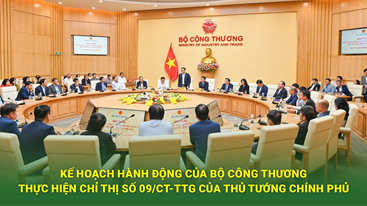 Kế hoạch hành động của Bộ Công Thương thực hiện Chỉ thị số 09/CT-TTg của Thủ tướng Chính phủ
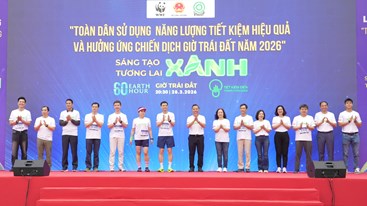 Bộ Công Thương phát động "Toàn dân sử dụng năng lượng tiết kiệm hiệu quả và hưởng ứng Chiến dịch Giờ Trái đất năm 2026"
 Thủ tướng Chính phủ Chỉ thị tăng cường thực hiện tiết kiệm năng lượng, thúc đẩy chuyển dịch năng lượng và phát triển phương tiện giao thông điện










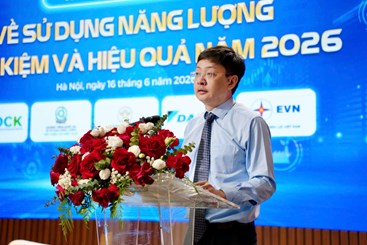 Phát động cuộc thi trực tuyến "Tìm hiểu kiến thức về sử dụng năng lượng tiết kiệm và hiệu quả năm 2026"
 Mô hình khách sạn thông minh trong quản trị năng lượng
 [PODCAST TKNL] Dán nhãn năng lượng - “Giấy thông hành” cho vật liệu xanh
 Tiết kiệm năng lượng cần sự chung tay của toàn xã hội
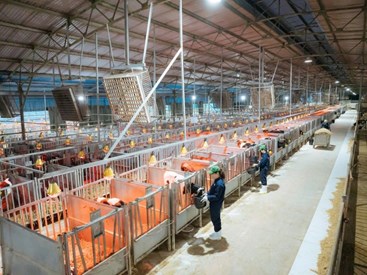 Doanh nghiệp chú trọng tiết kiệm điện, nâng cao hiệu quả sản xuất
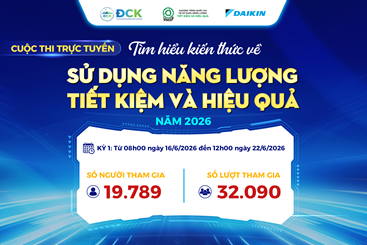 Kết quả Kỳ I Cuộc thi trực tuyến "Tìm hiểu kiến thức về sử dụng năng lượng tiết kiệm và hiệu quả năm 2026"
 [PODCAST TKNL] TP. Hồ Chí Minh tăng cường tiết kiệm điện và phát triển điện mặt trời mái nhà