-

Từ năm 2006 đến 2010, dự án “Nâng cao hiệu quả sử dụng năng lượng trong các doanh nghiệp vừa và nhỏ Việt Nam - PECSME” do Quỹ Môi trường toàn cầu tài trợ và Bộ KH&CN là cơ quan điều hành đã thực hiện được 201 dự án trong ngành sản xuất gạch, 144 dự án trong ngành gốm - sứ, 81 dự án trong ngành chế biến thực phẩm, 35 dự án trong ngành dệt-may, 38 dự án trong ngành giấy.
-

Một nhà máy điện mặt trời siêu loại chẳng bao lâu nữa sẽ được xây dựng trên cát của sa mạc Sahara. Tháng 7-2009, một nhóm nhà công nghiệp đã ký một dự án mang tên Desertec, nhằm thu năng lượng mặt trời của Sahara tại Ả Rập Saoudite, và cung cấp điện cho Âu châu, Bắc Phi, Trung Đông.
-

Chúng ta đều biết đèn LED dẫn đầu về hiệu quả của việc chiếu sáng. Trong những điều kiện cụ thể, liệu đèn LED có thể đem đến hiệu quả lớn hơn? Các nhà nghiên cứu thuộc đại học Kyoto đã hợp tác với Công ty Stanley Electric để tìm ra cách tăng cường độ phát sáng của tấm bán dẫn silicon trong đèn LED thêm vài lần nữa.
-

Verve Energy in collaboration with BP Solar are planning to build Australia’s largest ever grid-connected solar power plant. The photovoltaic power plant is expected to generate about 10MW of clean energy and according to the two companies, it will be built in Geraldton, Western Australia.
-

Summerhill Group, which is representing Ice Energy’s Ice Bear product in Canada, probably wishes the system has had more traction. Basically, the Ice Bear system uses off-peak electricity to create large blocks of ice, and then uses that ice during summer peak times to provide cooling — the idea being that it offsets the need to run air conditioners at times when electricity is most expensive.
-

A personal helicopter weighing just 230 lb created sizzling news when it flew on hydrogen with zero emission. With an ability to carry payloads up to 800 lbs, this pocket Hercules can fly for 90 minutes. Fitted with easy controls, this reaches a speed of 100 knots thanks to a pair of small yet powerful motors mounted on it. Two common and easily available things – Hydrogen peroxide (H2O2) and a catalyst – combined to bring about a milestone in personal aviation history with attention to the environmental issues as well! Avimech has combined these two to power engine in to an innovative machine.
-

The U.S. Navy’s Seal Beach facility in California is now home to a new $1.9 million solar parking lot, thanks to funding from the federal Recovery Act. Aside from creating new green construction jobs, the new solar facility will save the Navy more than $30,000 per year in electrical costs. It’s just one part of an all-around solar power makeover for the Navy, which just this summer has commissioned another $100 million worth of new solar projects.
-

A team of researchers from the University of Nevada at Reno is out to prove that sludge from a wastewater treatment plant can be dried, powdered, gassified as biofuel, and then burned to generate electricity, which in turn can run equipment at the same treatment plant. Talk about having your cake and eating it, too! The question is whether the researchers can make their sewage sludge-to-biofuel process operate at a cost low enough to compete with the price of conventional fuels.
-

The 155,000-square-foot facility is located in Lockport, N.Y., and unlike conventional ones, it uses 95 percent less water and 40 percent less energy. The energy-efficient data center has a power usage effectiveness rating of 1.08, which is quite less compared to the industry average of 1.92.
-

Two scientists are on a path-breaking method to produce ’sea-urchins’ to expedite the work capacity and efficiency of photovoltaic devices. Jamil Elias and Laetitia Philippe are the two scientists from Empa’s Mechanics of Materials & Nanostructures Laboratory who have been successful in producing these tiny ’sea urchins’ which are ready to revolutionize solar-cell technology.
-

Nhà cung cấp năng lượng EDF vừa công bố một thiết bị mới mang tên EcoManager, cho phép người dùng có thể tắt các đồ gia dụng từ bất cứ nơi đâu trong nhà. EcoManager là thiết bị không dây, có khả năng giúp con người điều khiển và tắt lò vi sóng, TV, radio tại mọi nơi cũng như ngắt các nguồn sử điện không cần thiết, cắt giảm tiền điện.
-
Energy supplier EDF have unveiled a new gadget that allows consumers to turn off their appliances from anywhere in the home. The wireless EcoManager enables householders to control and switch off their microwave ovens, TVs and stereos from any location, allowing them to cut needless energy use and save money on their bills in the process.
-

Six miles per gallon doesn't sound like much, but don't tell that to the Pinellas Suncoast Transit Authority. The transit authority's new diesel-electric hybrid buses get two miles per gallon more than the diesel-only cousins they are replacing.
-

Starting early to develop China's own energy-efficient and new-energy vehicles a decade ago, China now has an established industry with the research and development of three types of these vehicles and three key technologies at its core.
Zhang Laiwu, vice science and technology minister, made the remark Thursday at a press conference in Beijing, adding that China' s industrial pattern of green vehicles was relatively unique in the world, because of its early start to develop these vehicles.
-

The project on construction of a wind power electricity plant on Phu Quy Island has been implemented by the PetroVietnam Power Corporation. The project costs VND335 billion. The plant has capacity of 6MW and includes three 2MW turbines. The plant produces about 25.4 million of kWh annually. It will connect with the 22kV network and work smoothly with the diesel power plant located on the island. The project occupies permanent and temporary areas of 0.74ha and 0.87ha respectively.
-

On September 17, the Thien Tan Joint Stock Company was successful in connecting electricity sources from the Ha Nang Hydroelectric Plant with the national electricity network. The plant has been constructed in Tra Thuy Commune, Tra Bong District, Quang Ngai Province. The plant has capacity of 11MW and totally costs more than VND300 billion. The plant supplies 76 million of KW annually.
-

A recent study, conducted by the Rochester Institute of Technology, reveals that the total energy needed to make organic solar cells is less than the one needed to make inorganic solar cells.
-

The Dakne Hydroelectric Plant in Kon Ray District, Kon Tum Province has started running. The plant started construction in February 2007 and cost more than VND230 billion. Among those, VND180 billion equal to nearly 70 percent of the total capital was sourced from the An Binh Commercial Joint Stock Bank. The money granted by An Binh Bank was disbursed during the three year construction.
-

Hãng Samsung vừa giới thiệu dòng ổ đĩa cứng mới có tên gọi EcoGreen HĐ (hoặc viết tắt là F4EG). Dòng đĩa cứng này nối tiếp loại F3EG nhưng tiến bộ hơn hẳn vì chỉ có 3 phiến đĩa so với 4 của dòng đĩa trước đó.
-

Nowadays, batteries are hardly meeting the normal consumer’s demand regarding their capacity and lifetime. Complaints about laptops whose charge lasts too little, or about electric cars not being able to charge as quick and last as long as gasoline are frequent. Amprius, a US-based company, addresses these issues and develops abattery that they say it can hold double the charge of regular lithium ion batteries.








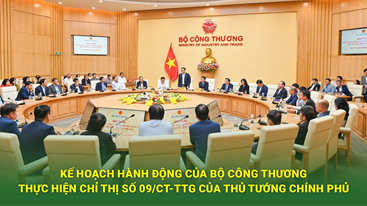 Kế hoạch hành động của Bộ Công Thương thực hiện Chỉ thị số 09/CT-TTg của Thủ tướng Chính phủ
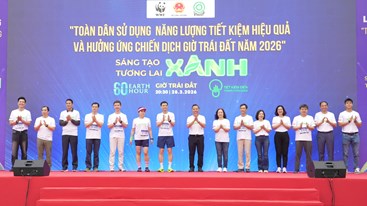 Bộ Công Thương phát động "Toàn dân sử dụng năng lượng tiết kiệm hiệu quả và hưởng ứng Chiến dịch Giờ Trái đất năm 2026"
 Thủ tướng Chính phủ Chỉ thị tăng cường thực hiện tiết kiệm năng lượng, thúc đẩy chuyển dịch năng lượng và phát triển phương tiện giao thông điện









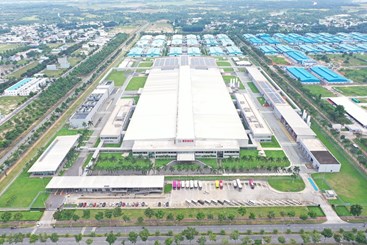 Nhà máy Bosch Việt Nam tối ưu năng lượng, hướng tới vận hành sản xuất bền vững
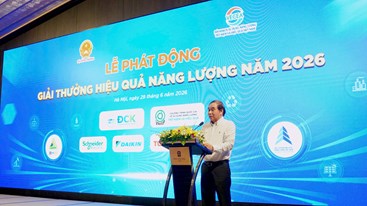
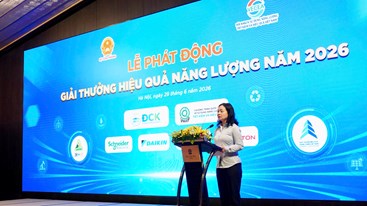 Bộ Công Thương phát động Giải thưởng Hiệu quả năng lượng năm 2026
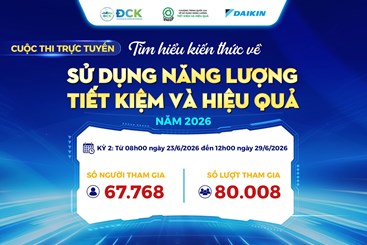 Kết quả Kỳ II Cuộc thi trực tuyến "Tìm hiểu kiến thức về sử dụng năng lượng tiết kiệm và hiệu quả năm 2026"
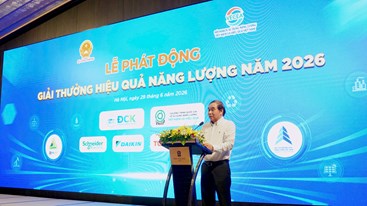 Thông báo nhận hồ sơ các Giải thưởng hiệu quả năng lượng năm 2026
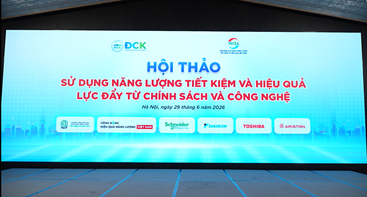 Hội thảo "Sử dụng năng lượng tiết kiệm và hiệu quả: Lực đẩy từ chính sách và công nghệ"
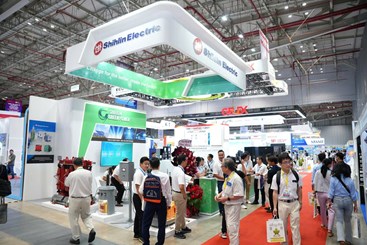 Sắp diễn ra Triển lãm công nghệ, thiết bị điện và sản phẩm tiết kiệm năng lượng, năng lượng xanh
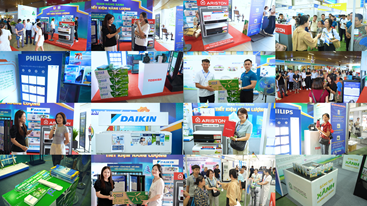 Chương trình Gian hàng Xanh -Tiết kiệm năng lượng năm 2026