-

With advantages such as reasonable price, energy efficiency, high luminescence efficiency and high durability, diverse styles, LED (light emitting diode) products are becoming attractive to Vietnamese consumers.
-

Hôm qua 9/7/2010, tại Matxcova Tổng thống Liên Bang Nga Dmitry Medvedev đã tiếp Tổng bí thư đảng Cộng sản Việt Nam Nông Đức Mạnh.Nội dung hội đàm của hai bên về các dự án chung trong các lĩnh vực thiết kế máy, khai thác mỏ, viễn thông và năng lượng. Điểm nổi bật của buổi hội đàm được đề cập là việc hợp tác năng lượng cũng như về khả năng Liên bang Nga sẽ xây nhà máy điện nguyên tử đầu tiên và một trung tâm nghiên cứu nguyên tử mới của Việt Nam.
-

Hai nhà khoa học Richard Sparling và David Levin, ĐH Manitoba (Canada) đã tạo ra nhiên liệu mới bằng cách sử dụng những chiếc cốc giấy bỏ đi để làm thức ăn cho các vi khuẩn. Theo cách đó, họ tạo ra nhiên liệu như etanol hay hydro.
-

American Electric Power CEO Michael Morris is all too familiar with the challenges of incorporating renewable energy into the existing industrial framework. But he believes that the largest of these hurdles can be overcome with sound planning for the future. Here’s what he has to say.
-

Japan's Toshiba said Friday it was working with Mitsubishi Motors to develop batteries for electric vehicles, as the race intensifies among automakers and technology giants to make emission-free cars. Toshiba, which spans electronic components, appliances and nuclear power plants has developed a fast-charging long life lithium-ion battery called SCiB (Super Charge ion Battery), which it plans to adapt for cars.
-

According to executives of Pacific West Energy LLC, one of the last players standing, securing the acreage needed to start production has been the high hurdle to overcome. Signing a preliminary accord on a biomass plant -- which could broaden its revenue stream -- is a promising step, but success still hinges on land acquisition and other complications being cleared.
-

Không giống các loại máy thường chỉ dùng quy trình làm lạnh, DEVap là loại máy dùng quy trình hấp thụ. Khi hoạt động, chất hút ẩm của máy là một loại chất lỏng với thành phần chính là muối lithi chloride hoặc calcium chloride ngậm nước có thể hút nước trong không khí tạo ra không khí khô.
-

Many passionately believe that clean coal is not the answer to decreasing carbon emissions or increasing the supply of energy. In fact, since Obama's decision to set aside $2.4 billion dollars "to lead the world in CCS technologies," disagreements (and for that matter, debates) have surfaced about its legitimacy as a true carbon-fighting, energy-producing solution.
-

A fresh-water wind farm is taking shape at Lake Erie and when completed will provide 20 megawatts and get on to about one gigawatt power by 2020. Huge individual turbines 300 feet tall, to be built by GE will be erected off Ohio, Cleveland. Better designs: These are special gearless super-efficient turbines, with three 176-foot long blades, which run with the help of a giant ring of magnets. The blades are longer due to strategically placed carbon fibre, and lighter too. Many moving parts like gearbox, coils and starter brushes are eliminated with resultant reduced maintenance. The giant magnetic ring array helps the turbine generate power even at very low speed.
-

The Eindhoven University of Technology from The Netherlands, with a EUR 1.2 million help from the Dutch government wants to develop ultra-efficient solar cells that are also cheap. They envision their cells having a 65% efficiency, something even the satellites would envy.
-

Một vài loại vi khuẩn có thể phân hủy dầu. Liệu những vi khuẩn này có thể giúp các công ty thay đổi phương pháp khai thác năng lượng từ dầu trong khi vẫn giảm được lượng khí thải CO2 trong quá trình đốt dầu và xăng hay không? Việc này là hoàn toàn khả thi, theo Steve Larter.
-

Phòng thí nghiệm năng lượng tái tạo thuộc cơ quan năng lượng Hoa Kì (NREL) vừa qua đã phát triển một quy trình điều hòa không khí mới với tiềm năng sử dụng ít năng lượng hơn so với các hệ thống hiện tại và đặc biệt giảm bớt tác động nóng lên toàn cầu.
-

On the morning of June 15, 2010, in coordination with the Energy Conservation Office of the Ministry of Industry and Trade, the Infrastructure Department and the Urban Development Department of the Ministry of Construction, and the Vietnam Energy Efficient Public Lighting (VEEPL) project, the Vietnam Urban Lighting Association and the Anh sang & Cuoc song (Light & Life) magazine organized a workshop to discuss the role of the media in ensuring efficient use of energy for lighting purposes.
-

Nuclear power technology is developing and Vietnam must be updated continuously with new technology, especially in the field of waste treatment and material reuse, said Brett Jacobs, the Southeast Asia Programs Manager under the International Energy Agency (IEA)’s Directorate of Global Energy Dialogue, at a meeting with Vietnamese Deputy Minister of Industry and Trade Do Huu Hao.
-

There’s a lot of talk about making power meters and the electric grid “smart” enough to handle additional energy from solar panels. National Semiconductor wants to make the solar panels themselves smarter. They’ve developed a chip that integrates into the junction boxes of solar panels, optimizing power production.
-

Since 2008, the Board of Directors has decided to collaborate with the Energy Efficiency Research and Development Center – ENERTEAM in conducting energy audits at the company headquarter. Results showed that energy conservation potentials at the company are very promising, all solutions proposed required little investment and were easy to implement in practical application.
-

Asia needs to create new business/production models for green and clean development in combination with preservation of natural resources and protection of the environment.
The need was addressed at seminars held on June 7, the second workday of the World Economic Forum on East Asia 2010 (WEF on East Asia 2010).
-

The positive trend of sustainable development has made lighting firms realize their responsibility to create “green” values with research and development, in order to develop environment-friendly products, improving life quality of people.
-

Ngày 17.6, Ngân hàng Phát triển Việt Nam - VDB đã cam kết tài trợ bổ sung 5.300 tỉ đồng vốn tín dụng đầu tư cho Tập đoàn điện lực Việt Nam (EVN) nhằm đẩy nhanh tiến độ các dự án điện đang diễn ra khá chậm thời gian qua.
-

A solar-powered plane is getting ready to hit the skies once again - this time, at night.
It will be the first ever manned night flight on a plane propelled exclusively by solar energy.
Solar Impulse will lift off from an airfield in Switzerland, on a sunny day sometime at the end of June.







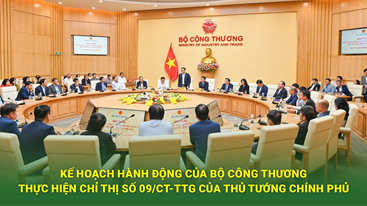 Kế hoạch hành động của Bộ Công Thương thực hiện Chỉ thị số 09/CT-TTg của Thủ tướng Chính phủ
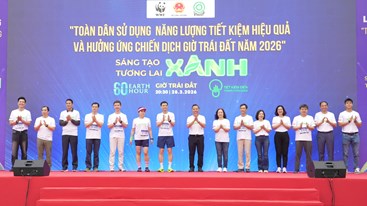 Bộ Công Thương phát động "Toàn dân sử dụng năng lượng tiết kiệm hiệu quả và hưởng ứng Chiến dịch Giờ Trái đất năm 2026"
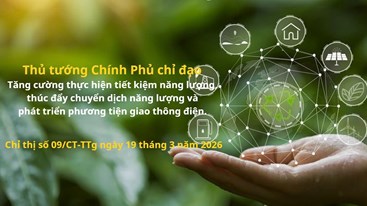 Thủ tướng Chính phủ Chỉ thị tăng cường thực hiện tiết kiệm năng lượng, thúc đẩy chuyển dịch năng lượng và phát triển phương tiện giao thông điện

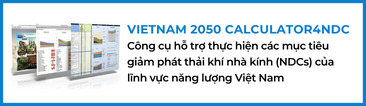






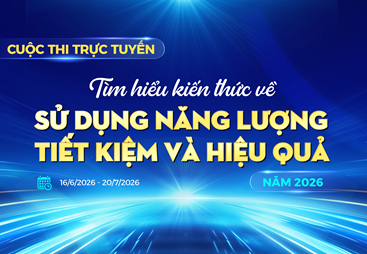
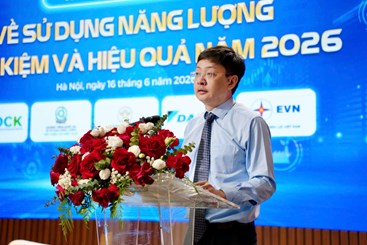 Phát động cuộc thi trực tuyến "Tìm hiểu kiến thức về sử dụng năng lượng tiết kiệm và hiệu quả năm 2026"
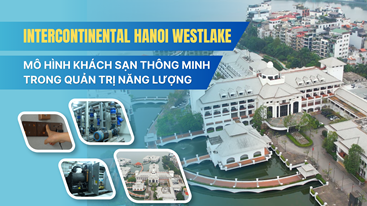 Mô hình khách sạn thông minh trong quản trị năng lượng
 [PODCAST TKNL] Dán nhãn năng lượng - “Giấy thông hành” cho vật liệu xanh
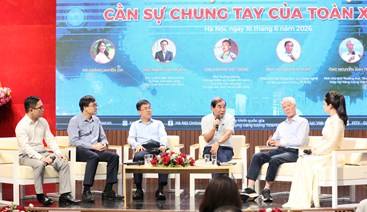 Tiết kiệm năng lượng cần sự chung tay của toàn xã hội
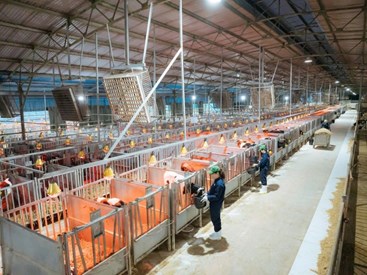 Doanh nghiệp chú trọng tiết kiệm điện, nâng cao hiệu quả sản xuất
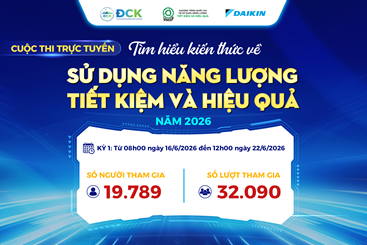 Kết quả Kỳ I Cuộc thi trực tuyến "Tìm hiểu kiến thức về sử dụng năng lượng tiết kiệm và hiệu quả năm 2026"
 [PODCAST TKNL] TP. Hồ Chí Minh tăng cường tiết kiệm điện và phát triển điện mặt trời mái nhà