-

Havana Energy Ltd – part of the Esencia Group of companies - has teamed up with Zerus SA, a company linked to the Ministry of Sugar, to develop a pilot 30MW power plant at Ciro Redondo Sugar Mill, about 400km from Havana, and as a second stage four further power plants. The business will be developed in a joint venture company.
-

Electricity of Vietnam (EVN) Group yesterday officially started construction on the second turbine of Song Tranh 2 hydropower plant with designed capacity of 95MW.
The Song Tranh 2 hydropower plant project has been conducted by EVN Group as the main investor. It's the second hydropower plant to be built on Vu Gia-Thu Bon river system. It is expected that the hydropower plant will produce annual electricity output of 679.6 million KWh to join the national grid.
-

Researchers at the University of Leeds are developing a roasting process that would transform raw biomass from a bulky , water-saturated material into an energy-rich powder that is perfect for burning in coal-fired power plants. Called torrefaction, it is a relatively low-temperature process similar to that used in roasting coffee beans. If the researchers can overcome a few stumbling blocks, the process could lead to a new burst of coal-to-biomass power plant conversions, and consequently to lower greenhouse gas emissions.
-

Both the private sector and government in Korea have increased spending on clean energy and green technology development in the past few years. Korea’s Ministry of Knowledge Economy has worked with private firms to find new improvements in battery technology, photovoltaics, geothermal power generation, and biofuels. And this year, the Korea government expects to inject 1 trillion won (US$900 million) into current and next generation clean energy sources.
-

UK regulator, the Renewable Fuels Agency (RFA), has issued the subsidiaries of two major oil companies with penalties for not meeting biofuel standards. Under the Renewable Transport Fuels Obligation (RTFO), companies supplying over 450,000 l of petrol or diesel to the UK market have to register with the RFA and match their supply with a percentage of biofuel, as well as providing information on its carbon intensity and sustainability.
-

Hệ thống định vị trực tuyến mới ra mắt cho phép con người có thể tính toán chính xác lượng năng lượng thu nhận được hệ thống cung cấp điện mặt trời tại một điểm nhất định cũng như số tiền có thể tiết kiệm được từ các thiết bị trước khi quyết định vị trí lắp đặt chúng. Hệ thống này vừa đã được đưa vào sử dụng tại thành phố Dever, bang Colorado, Australia.
-

This is the finding of a recent US study that was compiled by the Pacific Northwest National Laboratory Department of Energy, the University of Maryland and NASA, which introduced a new assessment method to analyze interactions between solar thermal and electrical systems. The aim is to overcome one of the greatest difficulties of economic models that were used up to now for the energy evaluation of solar power, which practically did not take into account the source’s natural variability compared to network loads.
-

Benbole Energy Farm, between St Kew and St Mabyn near Bodmin in North Cornwall, has been granted permission by Cornwall councillors following an application to develop the 10-acre site. It means the farm will provide up to 800 homes with green energy. Renewable energy consultants Silicon Valley Limited, who successfully applied for planning permission, say construction work will begin in January.
-

The name Super X Divertor ( SXD) may sound like a popular video game, but actually it is a new nuclear technology which, its developer says, can overcome twin problems of radioactive waste and fears of proliferation associated with conventional nuclear reactors.
-

The Indian state of Gujarat has approved Asia’s first commercial-scale tidal power project in the Gulf of Kutch. The 50 MW tidal current power plant will be developed by UK company Atlantis Resources Corporation in partnership with Gujarat Power Corporation, with construction starting as early as 2011.
-

Many studies on biofuel crop viability focus on biomass yield, or how productive a crop can be regionally. There has been relatively little research on land availability, one of the key constraints of biofuel development. Of special concern is whether the world could even produce enough biofuel to meet demand without compromising food production
-

Chief minister Narendra Modi on Thursday formally launched work on the 500 MW solar power park, Asia's largest such project, at Charanka village in Patan district, and expressed confidence that the park would bring a lot of benefits for the local populace and the area.
-

In conventional photoelectrochemical cells, sunlight is converted into electricity and an electrolyte is used to move electrons which creates a current. The problem is that these cells have chromophores, which are light-absorbing dyes that degrade after being exposed to sunlight. But with self-repairing solar cells, this would no longer be an issue. To create these new solar cells, the Purdue research team utilized two crucial elements needed to make this technology imitate nature, which was molecular recognition and thermodynamic metastability. This allows the system to be dissolved and reassembled on a regular basis, replacing photo-damaged dyes continuously.
-

There’s a lot of debate over to what extent the demand for cleantech products and oil prices are linked, but in general sky high oil prices seem to help boost demand for goods like electric cars, and biofuels, as well as stimulate cleantech investing. At least that’s how it looked back in 2008, when oil traded around $100 a barrel for awhile, and hit a high of $145.
-

Li Keqiang, the top official tipped as China’s next Prime Minister, has begun a four-day visit to the UK with the announcement of a £6.4m licensing deal between Scottish and Sino-Scottish companies on clean energy development. Waste-to-energy technology developed by Scottish company W2E Engineering will be licensed to Sino-Scottish firm Shanghai Huanan Boiler and Vessel Cochran (SHBV Cochran) under the agreement.
-

Biofuel crops can potentially meet half of the current global demand for fuel without affecting food crop production, according to researchers at the University of Illinois. Ximing Cai, a professor of civil and environmental engineering at the university, led a team of researchers in isolating land areas across the globe suitable for producing biofuel grass crops with minimal agricultural or environmental impact.
-

Theo báo cáo của Phòng Năng lượng tái tạo Argentina (CADER), nước này đã vượt qua Mỹ để trở thành nhà sản xuất dầu diezel sinh học lớn thứ 4 trên thế giới, với sản lượng gần 2 triệu tấn/năm. CADER cho biết năm 2010, Argentina đã sản xuất 1,9 triệu tấn diezel sinh học, tăng 51% so với năm 2009 và thu về 1,9 tỷ USD. Báo cáo cũng chỉ ra rằng trong giai đoạn 2006-2010, sản xuất diezel sinh học của Argentina đã tăng tới 250%.
-

Scientists with USDA's Agricultural Research Service (ARS) have found that barley grain can be used to produce ethanol, and the leftover byproducts-barley straw, hulls , and dried distillers grains (DDGS)-can be used to produce an energy-rich oil called bio-oil. The bio-oil could then be used either for transportation fuels or for producing heat and power needed for the grain-to-ethanol conversion. ARS is USDA's principal intramural scientific research agency, and these results support the USDA priority of developing new sources of bioenergy.
-

Wind power rose by 18.5 per cent in 2010 and now meets 16 per cent of demand. Luis Atienza, managing director of Spain's electricity grid, predicted that "within three years wind power will overtake nuclear as an electricity source". At its peak, on November 9, wind power met 43 per cent of demand.
-

Energy will be at the top of the agenda at the first EU summit chaired by Hungary on 4 February. Officials will push for negotiation between leaders to focus on controversial EU energy market reform and measures to prevent Europe losing its lead as a clean energy hub to China and other emerging economies.







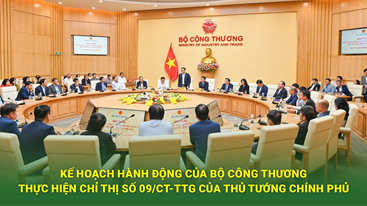 Kế hoạch hành động của Bộ Công Thương thực hiện Chỉ thị số 09/CT-TTg của Thủ tướng Chính phủ
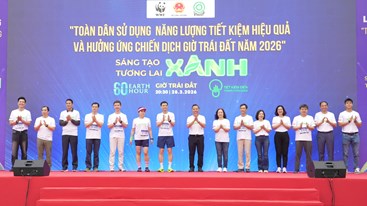 Bộ Công Thương phát động "Toàn dân sử dụng năng lượng tiết kiệm hiệu quả và hưởng ứng Chiến dịch Giờ Trái đất năm 2026"
 Thủ tướng Chính phủ Chỉ thị tăng cường thực hiện tiết kiệm năng lượng, thúc đẩy chuyển dịch năng lượng và phát triển phương tiện giao thông điện










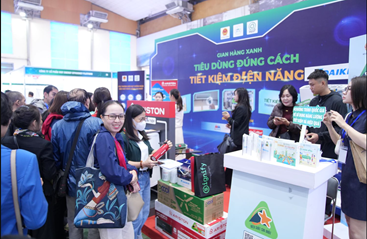 Sắp diễn ra chuỗi sự kiện Triển lãm và hội thảo về sử dụng năng lượng tiết kiệm và hiệu quả toàn quốc
 Quy định về đào tạo, cấp chứng chỉ quản lý năng lượng và kiểm toán viên năng lượng
 [PODCAST TKNL] Sử dụng năng lượng tiết kiệm, hiệu quả trong doanh nghiệp, công trình và hệ thống điện hiện đại
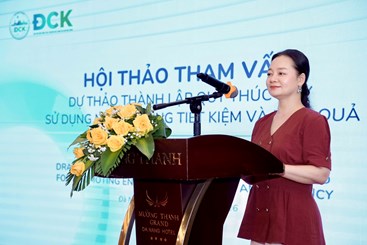 Tham vấn Dự thảo thành lập Quỹ thúc đẩy sử dụng năng lượng tiết kiệm và hiệu quả
 Hội nghị sử dụng năng lượng tiết kiệm và hiệu quả toàn quốc năm 2026
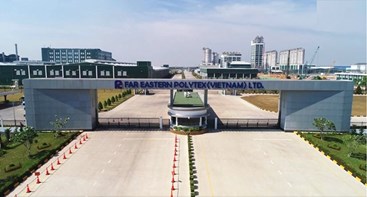 Polytex tiên phong tiết kiệm năng lượng trong ngành dệt nhuộm
 Quy chuẩn kỹ thuật quốc gia về công trình xây dựng sử dụng năng lượng hiệu quả