-

Utilizing what we have in a wiser way could lead us to something worth it. As the famous line goes, “everything has its purpose” no matter how small or big it is. It also includes waste products such the awful pet poop, specifically dog poop. In Cambridge, Massachusetts, a dog park hasn’t been considering these dog poop a waste at all. In fact, in has turned out to be a very useful.
-

Kia has brought its latest innovation at the 2010 Paris auto show in the form of an electric car called “POP“, which aims to take small cars to the next step and integrate them into a trend that only a few years ago had been considered science fiction.
Featuring an organic transparent LED display, the KIA POP surprises through its innovative shapes, pleasant to look at and though not strikingly UFO-like.
-

Prominent corporations are paying special attention to go green and create a conducive environment for clean and green energy. Walmart too is taking appreciative steps in the field of alternative energy. In the year 2007, Walmart entered into a partnership with Environmental Defense Fund (EDF) to provide a thrust to the photovoltaic technologies. It was related with thin-film solar. They aimed for taking it out from labs to the real world.
-

Solar cells currently used are mostly bulky and made from silicon and other non-recyclable materials, hence they’re not as green as they should be. Mimicking nature might be a solution to this problem. More exactly, North Carolina State University researchers have prototyped a water-based solar cell, mimicking the functioning of a leaf, to produce electricity.
-

Designers have come up with a new portable wind turbine that is very easy to be transported and put into function by just one person. Dubbed the “Mobile Wind Turbine”, it includes a hybrid carrier that uses electricity harnessed from wind energy to run.
-

Báo cáo của 2 hãng cho biết: “ Pin nhiên liệu hyđro mới được sản xuất tương thích với toàn bộ các mẫu xe của hãng Pedego.Chiếc pin nặng chỉ gần 700g này có khả năng tạo ra 700 Wh điện năng trong khi loại pin liti cũ nặng hơn 3kg chỉ tạo được khoảng 350 Wh.
-

Designed by the Tokyo Institute of Technology and fine-tuned by researchers at MERSTech in partnership with the ONR's office in Tokyo, the Magnetic Energy Recovery Switch (MERS) harnesses and recycles residual magnetic power that is produced by electrical current. By using a device that controls the flow of electricity, light bulbs can now maximize their potential. The proposal for the expanded experiment is scheduled for completion in October.
-

Chris Huhne threatened to get heavy-handed with gas and electricity providers on Tuesday, warning that he would step in if the industry failed to tell customers about price rises.The energy secretary hit out at providers who “put up their prices without telling you for three months”.
-
According to the Pedegopress release , “The announced battery-fuel cell hybrid system is compatible with all existing Pedego bicycles and batteries. For every 1.5 lbs. of weight a rider carries, an additional 700 watt-hours of energy is available (compared to ~350 watt-hours for an ultra-high performance lithium-polymer battery at a weight of 7 lbs.).
-

Advances in solar energy efficiencies have so far been made with irregular surfaces, thinner tabbing between cells, more optically perfect glass and even special coatings, but now Stanford engineers say the best efficiency is via ultra-thinpolymer films inside solar cells that allow more “bounce room.”
-

With a stalled Green energy movement that seems to have convinced few people that it can actually replace our dependence on fossil fuels, Tom Rand thinks it's time to move the goal posts. An engineer who is also a venture capitalist who puts his money where his mouth is, his challenge is simple: America can either pioneer green energy as an investment that will pay off for centuries to come, or wind up paying someone else for the same solutions down the road.
-

The inventor says his device can cut the energy use by 25%. Moreover, it can prove itself healthy for those who suffer from asthma, allergies, of whatever age or sex. CleanAir supposedly removes particles, viruses, ozone, bacteria, organic solvents, hydrocarbons and cigarette smoke from the air.
-

Theo Cơ quan bảo vệ môi trường, một phương tiện chuẩn đi được trung bình 12,000 một năm. Mỗi gallon xăng tiêu thụ phát thải ra 19,4 pound khí carbon dioxide. Một phương tiện giao thông chuẩn trung bình đi được 23.9 dặm/gallon Chỉ bằng cách đạp xe 2 lần 1 tuần, 3 người mỗi người đã giảm được 77,598 pound khí carbon dioxide và tổng cộng 232,794 pound lượng khí phát thải.
-

Governor Pat Quinn announced that Illinois residents now have a second chance to receive a discount on their purchase of ENERGY STAR-qualified appliances on Sept. 24, during the Illinois ENERGY STAR Replacement Appliance Rebate Program.
-

All new investments must undergo independent assessments and government reviews on whether they are energy-saving or not before being approved by regulators, the National Development and Reform Commission, China's top economic planner, said yesterday in a statement on its website.
-

Vertical axis wind turbines have recently been revived by a few innovations made to them by scientists all over the world. Sauer Energy is one of them, and their turbine has a high efficiency because it’s designed to maximize the drag, so the blades are moved more efficiently by the wind.
-

Engineering researchers from Tufts University, the University of Wisconsin-Madison and Harvard University have demonstrated the low-temperature efficacy of an atomically dispersed platinum catalyst, which could be suitable for on-board hydrogen production in fuel-cell-powered vehicles of the future.
-

Adobe, the software giant, has installed 12 100-kilowatt solid oxide fuel cells, or Energy Servers, from Bloom Energy at the Adobe headquarters. The cumulative 1.2 megawatts of power that the fuel cells generate will provide Adobe with about one-third of the power it needs to run the building.
-

Last year, the Ocean Power Technologies (OPT) company has developed a tidal power generator that has now been connected to the energy grid at the Marine Corps Base Hawaii as part of the firm’s program with the US Navy to test wave energy technology, giving the US their the first-ever grid connection for a wave energy device.
-

The phase-out of incandescent light bulbs is part of the EU's strategy to cut greenhouse gases by 20% by 2020. Replacing the old lamps with more efficient models is expected to reduce energy consumption for lighting by 60% in the EU, equivalent to saving 30 million tons of CO2 pollution every year.







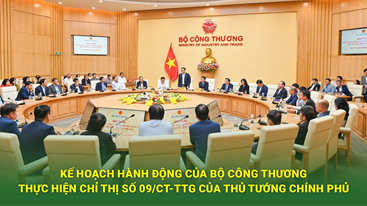 Kế hoạch hành động của Bộ Công Thương thực hiện Chỉ thị số 09/CT-TTg của Thủ tướng Chính phủ
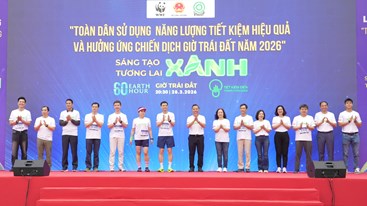 Bộ Công Thương phát động "Toàn dân sử dụng năng lượng tiết kiệm hiệu quả và hưởng ứng Chiến dịch Giờ Trái đất năm 2026"
 Thủ tướng Chính phủ Chỉ thị tăng cường thực hiện tiết kiệm năng lượng, thúc đẩy chuyển dịch năng lượng và phát triển phương tiện giao thông điện










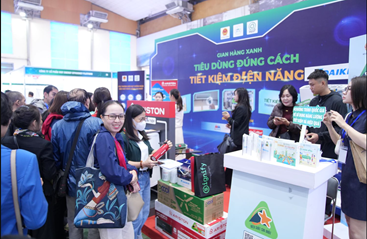 Sắp diễn ra chuỗi sự kiện Triển lãm và hội thảo về sử dụng năng lượng tiết kiệm và hiệu quả toàn quốc
 Quy định về đào tạo, cấp chứng chỉ quản lý năng lượng và kiểm toán viên năng lượng
 [PODCAST TKNL] Sử dụng năng lượng tiết kiệm, hiệu quả trong doanh nghiệp, công trình và hệ thống điện hiện đại
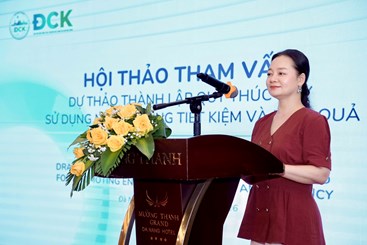 Tham vấn Dự thảo thành lập Quỹ thúc đẩy sử dụng năng lượng tiết kiệm và hiệu quả
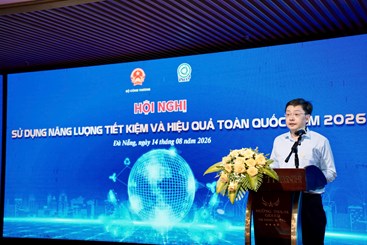 Hội nghị sử dụng năng lượng tiết kiệm và hiệu quả toàn quốc năm 2026
 Polytex tiên phong tiết kiệm năng lượng trong ngành dệt nhuộm
 Quy chuẩn kỹ thuật quốc gia về công trình xây dựng sử dụng năng lượng hiệu quả