-

One of my favorite science fiction ideas is in a short story called Light of Other Days about something called “slow glass.” Light took decades to pass through. In this story, the idea was that people could buy glass windows that took so long for the light to pass through, that they could nostalgically watch long gone scenes, such as their children playing outside as toddlers long after they had gone off to college, or green fields with horses where now ugly cities grew.
-

Sự suy thoái kinh tế không ảnh hưởng nhiều đến Công viên công nghệ Edenvale ở Thung lũng Silicon, phần phía Nam của khu vực vịnh San Francisco ở Bắc California (Mỹ). Nhiều công ty đặt trụ sở ở đó vẫn không ngừng mở rộng hoạt động trong 18 tháng qua.
-

Snohomish County is pledging to cut energy use at its facilities by 10 percent as part of a Snohomish County PUD’s “Energy Challenge” campaign. The county is joining more than 150 local businesses and nearly 3,000 residential utility customers who have vowed to make comparable energy cuts. The goal is to save money and cut greenhouse gases, while reducing overall demand on the PUD’s energy supply.
-

CMU aims to save more than $600,000 over the next two years by reopening a gas turbine at the Central Energy Facility. The gas turbine was installed in 1991, but was shut down in 2002 because it was not economically efficient, said Steve Lawrence, associate vice president of Facilities
-

While some members of Congress seem to think that spending federal dollars on local projects is a bad thing, hundreds of farmers and rural business owners are eagerly taking the opportunity to improve their operations through federal clean energy loans and grants totalling more than $30 million. The funds, administered through the U.S. Department of Agriculture, will pay for 516 projects that install renewable energy equipment and improve energy efficiency at agricultural operations.
-

This thought constantly runs through the mind of Casey Lauer, director of energy and environment at K-State. It is a topic that is becoming debated more and more, and Lauer is one of many people on campus trying to figure out how the university can save money through decreased energy use. In Forum Hall in the K-State Student Union on Monday, Lauer and others spoke on the topic of energy consevation.
-

Smart metering solutions will allow the introduction of time-based tariffs and provide consumers with information about their electricity use in real time. But installing the equipment in each household will do nothing unless consumers are given adequate information about how to make use of them.
-

On November 12, the Specialized Science and Technology Council of Soc Trang Province held a meeting to assess the draft of a project aiming to build an improved model of biogas plants to generate power for use by livestock breeding farms in Chau Thanh District. This project is presided over by the Soc Trang Center for Science and Technology Application and headed by engineer Duong Hoang Van, the deputy director of the center’s Technical Department.
-

The 30th India International Trade Fair (IITF 2010) themed ‘Clean and Energy Efficient Technology, Products and Services’ was opened in Pragati Maidan, New Delhi, on November 14. Vietnamese Ambassador to India Nguyen Thanh Tan cut the ribbon to inaugurate the Vietnam Pavilion at the fair.
-

Today Osram Sylvania, a North American lighting manufacturer, announced that it will be commercially producing an LED light bulb designed to replace a 60-watt incandescent bulb. Millions of 60-watt incandescent bulbs are currently sold each year, but according to the Energy Independence and Security Act of 2007, these light bulbs must be phased out by 2014.
-

EnerNoc EfficiencySmart Energy Management Software cuts energy costs by 15% without undertaking any efficiency projects. EnerNoc, a well-established efficiency software company, released a new line of energy management software yesterday that the company's Senior Vice President of Marketing and Sales, Gregg Dixon, claims can help companies cut their energy costs by 15% without undertaking any efficiency projects.
-

Ở Việt Nam mới chỉ có 1 công trình công quyền đầu tiên được giải thưởng Kiến trúc xanh BCI Green Design Award 2010 do BCI Asia trao tặng (công trình trụ sở UBND & Khối QLNN thị xã Châu Đốc). Do thiết kế dựa theo điều kiện tự nhiên (tận dụng hướng giao thông đường bộ và đường thủy) nên công trình có 70% thời gian trong ngày không dùng đèn chiếu sáng.
-

The year of 2010 is considered an important year in the development of Petro Vietnam in particular and of the entire petroleum industry in general.Besides ensuring the completion of the production plan of the year, the Company is also facing challenges in implementing targets in the final year of the five year plan 2006-2010 with volatile external conditions.
-

"Ho Chi Minh City currently has partnerships with many localities of the Russian Federation; many cooperative programs and projects between the two sides have been deployed in both Vietnam and Russia. The city always needs the support and cooperation from Russia and Russian localities, especially in the areas in which Russia is one of the leading countries such as science, technology, energy, oil and gas ..." - Mr. Le Minh Tri stressed and expressed the hope that cooperation between the two sides would become increasingly practical and efficient.
-

At noon of November 18th, at the construction site of Son La hydropower plant, unit 1 of Son La hydropower plant was officially put into no load operation. This is the decisive step in determining the success of unit 1 at the end of this November, one month earlier than the schedule approved by the Prime Minister and 2 years earlier than the progress proposed by the National Assembly.
-

According to information from the British Embassy, from November 22th to 26th, a trade mission of the Energy Industries Corporation of the UK (EIC) will come to Vietnam to explore investment opportunities in the oil industry. In HCM city, representatives of companies will have meeting with PetroVietnam and companies which were already established and operating in Vietnam market such as Chevron, Conoco Phillips, JVPC and Worley Parsons. The delegation will also visit and work with companies operating in the field of oil and gas in Vung Tau.
-

Thanks to a $3 million federal stimulus grant given to the Utah Energy Program, solar panels will be installed in every school district in the state, at 73 Utah schools in all. Students will be able to track online how many kilowatt hours of energy their solar photovoltaic arrays generate, and teachers at the schools will receive training to teach students about solar, wind and geothermal technologies.
-

Prime Minister affirmed: “Vietnam highly appreciates potential and technologies of South Korean businesses and calls upon South Korean businesses to continue expanding investment in Vietnam, especially in the fields of economic - social infrastructure development, new energy and material production, high technology product manufacturing, support industry, human resource and health development, and agriculture, forestry and fishery development.”
-

Since the plants were put into operation, the total output has been 18 billion kWh and the total revenue has been nearly VND22,000 billion. In 2010, Ca Mau 1 and Ca Mau 2 power plants - Ca Mau Petrovietnam Power Company - plans to produce 7.6 billion kWh, and up to November 10th, the total output has exceeded 4% of the plan, accounting for 13% of electricity output of the whole country, the revenue has reached VND10,512 billion.
-

The Dong Giao Foodstuff Export Joint Stock Company (DOVECO) in Tam Diep Town, Ninh Binh Province was established in 1955 and operates under the Vietnam National Vegetable, Fruit and Agricultural Product Corporation, Ministry of Agriculture and Rural Development. With four modern production lines, the company is capable to make 25,000 tonnes of products each year. DOVECO is a leading provider of processed agricultural products in Vietnam. It is also the first company to bring Vietnamese fruit and vegetables to the world market.







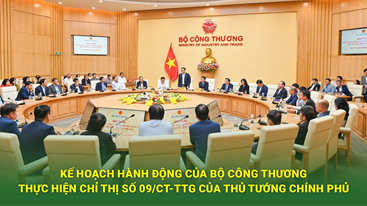 Kế hoạch hành động của Bộ Công Thương thực hiện Chỉ thị số 09/CT-TTg của Thủ tướng Chính phủ
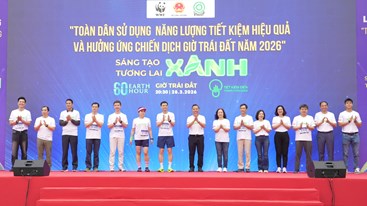 Bộ Công Thương phát động "Toàn dân sử dụng năng lượng tiết kiệm hiệu quả và hưởng ứng Chiến dịch Giờ Trái đất năm 2026"
 Thủ tướng Chính phủ Chỉ thị tăng cường thực hiện tiết kiệm năng lượng, thúc đẩy chuyển dịch năng lượng và phát triển phương tiện giao thông điện










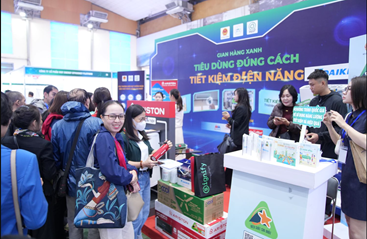 Sắp diễn ra chuỗi sự kiện Triển lãm và hội thảo về sử dụng năng lượng tiết kiệm và hiệu quả toàn quốc
 Quy định về đào tạo, cấp chứng chỉ quản lý năng lượng và kiểm toán viên năng lượng
 [PODCAST TKNL] Sử dụng năng lượng tiết kiệm, hiệu quả trong doanh nghiệp, công trình và hệ thống điện hiện đại
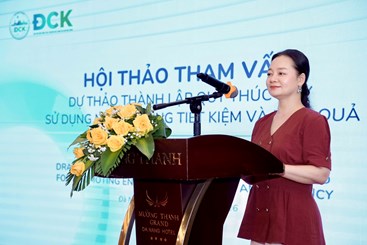 Tham vấn Dự thảo thành lập Quỹ thúc đẩy sử dụng năng lượng tiết kiệm và hiệu quả
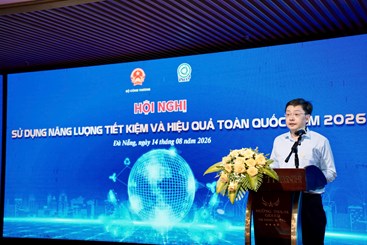 Hội nghị sử dụng năng lượng tiết kiệm và hiệu quả toàn quốc năm 2026
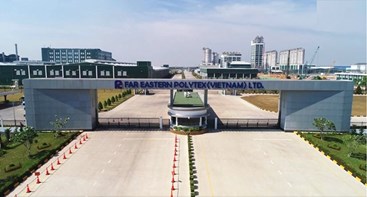 Polytex tiên phong tiết kiệm năng lượng trong ngành dệt nhuộm
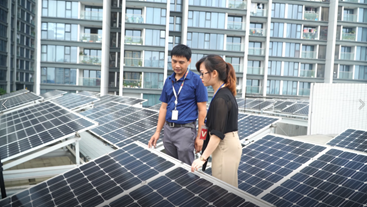 Quy chuẩn kỹ thuật quốc gia về công trình xây dựng sử dụng năng lượng hiệu quả